


Wilmington residents who shaped our shared history
There are at least eight popular eateries near N. Shipley and W. 9th streets. Decades ago, this spot used to be home to the Eagle Coffee Shoppe, built into the old Midtown Parking Center — a public parking garage run by the Wilmington Parking Authority.
Today, there is a Delawa re historical marker at that intersection. It tells the story of Burton v. Wilmington Parking Authority, a landmark U.S. Supreme Court case. This decision played a key role in ending discrimination in public facilities, both in Delaware and across the country.
In August 1958, City Councilman William Burton walked into the Eagle Coffee Shoppe and was refused service simply because he was Black. Burton did not accept it — he reached out to Louis L. Redding, Delaware’s first Black attorney and a key figure in Brown v. Board of Education. Redding went to court for Burton, arguing that it was unconstitutional for a public facility to discriminate based on race.
The first court agreed with Burton, but then the Delaware Supreme Court overturned that decision, saying the state was not responsible for what the restaurant did. In 1961, the U.S. Supreme Court sided with Burton, deciding that because the restaurant was part of a public facility, its discrimination counted as state action and violated the Equal Protection Clause of the 14th Amendment of the United States Constitution.
Besides the historical marker, a nearby street, Burton Place, is named for the courageous Councilman.
And just a short walk away at 500 Delaware Avenue, the post office honors another Wilmington-born trailblazer: Mary Ann Shadd Cary. She is in the Delaware Women’s Hall of Fame, having made hermade her mark as an educator, publisher, and champion for abolition and women’s rights. A modest plaque hangs on the right-side wall several feet beyond the entrance.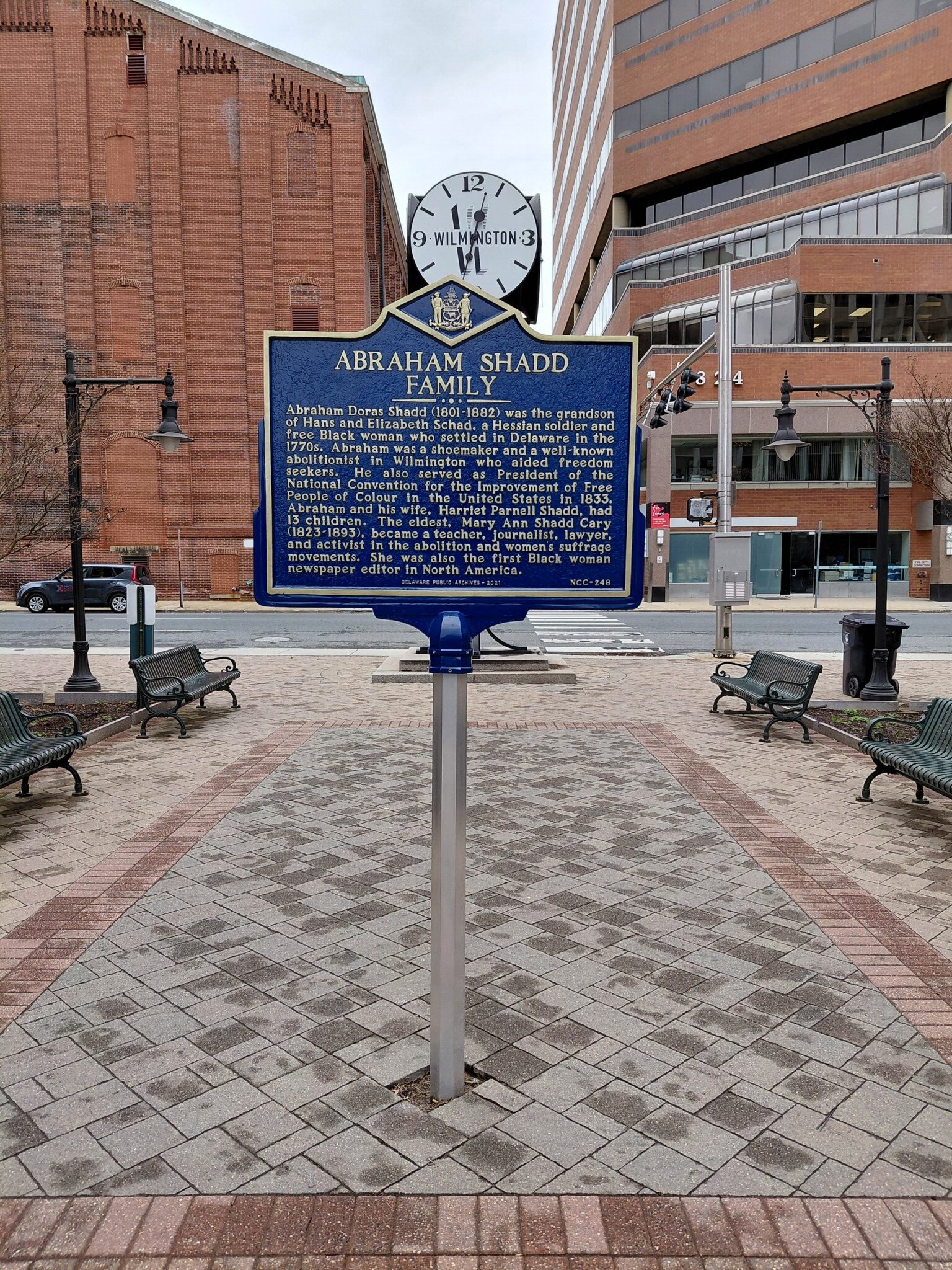
Cary was born in 1823 and became the first Black woman in North America to edit and publish a newspaper, The Provincial Freeman. Through her paper, she promoted education, civil rights, and self-reliance for Black Canadians. She was also a teacher, and her family helped people escaping slavery by offering them shelter and educational opportunities after the Fugitive Slave Act of 1850 made the U.S., including Delaware, unsafe. Cary traveled widely, speaking at conventions across America, helping shape public opinion before, during, and after the Civil War.
Her father, Abraham Shadd, was also a well-known abolitionist and community leader who fought for equal rights for Wilmington’s free Black residents. There is a historical marker for the Abraham Shadd Family in Peter Spencer Plaza, close to where the family lived and conducted their Underground Railroad work before relocating to Canada. The Shadds are noted for their abolition work as well in West Chester, Pennsylvania. Some descendants still reside in Delaware.
Further west at the intersection of 6th and Madison Streets in West Center City, stands a life-size bronze statue of Helen Chambers, a community advocate who worked tirelessly to create safe spaces for neighborhood kids and their families.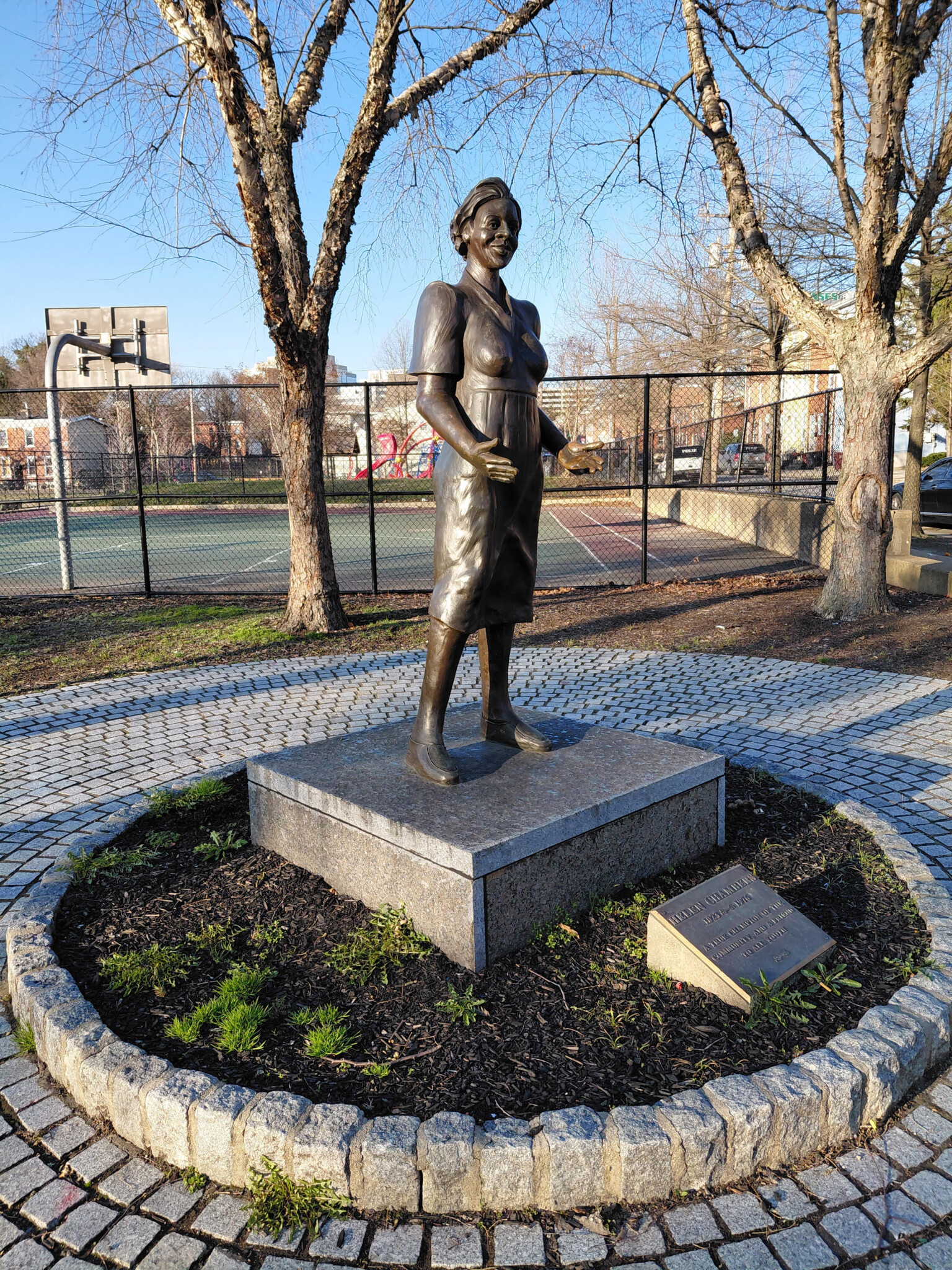
Chambers’ statue stands at the entrance to a 1.73-acre park that bears her name. This park is a hub for events like Wilmington Wellness Day and other community-focused programs. Across the street is the William Hicks Anderson Community Center that offers after-school programs, sports leagues, and community events for hundreds of local families annually.
In addition to these public tributes, visitors can dive even deeper into Wilmington’s diverse history at the Delaware History Museum. The Journey to Freedom exhibit traces the experiences of African Americans in Delaware from 1639 to today. The museum also hosts engaging programs and guest speakers at its Mitchell Center for African American Heritage.

