


Nearly 250 years after the American Revolution, a remarkable chapter of Wilmington’s history is finally being brought to light. A new memorial at the historic Wilmington-Brandywine Cemetery honors at least 66 Revolutionary War soldiers buried together at the site, including 14 African American patriots who served in the Rhode Island Regiment.
Dedicated on September 23, 2026, as part of Wilmington’s commemoration of America’s 250th anniversary, the monument gives visitors a new opportunity to discover the stories of soldiers whose final resting place had gone largely unrecognized for generations.
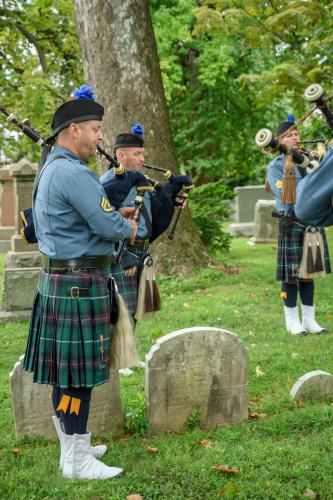 One of the Nation’s Largest Revolutionary War Mass Graves
The story beneath Wilmington-Brandywine Cemetery connects Delaware to both sides of the American Revolution.
The mass grave contains the remains of at least 38 British soldiers who died in Wilmington after being wounded during the Battle of Brandywine in 1777, as well as 28 soldiers from the Rhode Island Regiment who died of smallpox in Wilmington in 1781 and 1782 following the Battle of Yorktown. Historical research has identified all 28 Rhode Island soldiers and five British officers by name, an extraordinary level of identification for a mass grave dating to the Revolutionary era. Those 33 names now appear on the permanent memorial, ensuring their stories are no longer lost to history.
Remembering 14 African American Patriots
Among the stories preserved at the site are those of 14 African American members of the Rhode Island Regiment. The regiment included one of the largest contingents of African American soldiers in the Continental Army, with Black soldiers serving alongside white and Indigenous soldiers during the fight for American independence. Of the 14 African American soldiers buried in Wilmington, 10 were free men and four enlisted while enslaved. For those four men, military service offered a path toward freedom at a time when the ideals of liberty at the heart of the Revolution did not extend equally to everyone.
Their inclusion adds an important perspective to the story of American independence and the diverse people who participated in the fight.
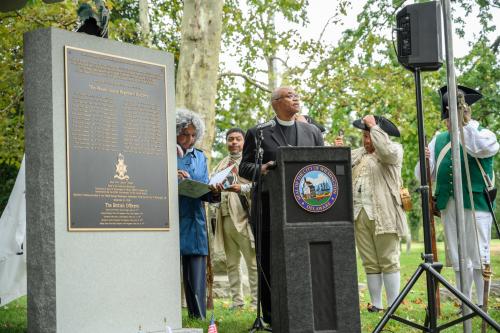 The Story of Private Caesar Rose
One name on the memorial carries an especially powerful connection between the past and present: Private Caesar Rose.
Rose served with the Rhode Island Regiment and participated in major engagements including the Battle of Yorktown. Afterward, he came to Wilmington, where he died of smallpox on December 9, 1781, at the city’s military hospital. That hospital once stood on the site where The Grand Opera House stands today. Nearly 245 years after Rose's death, his descendant Jason Roomes traveled from Rhode Island to Wilmington to participate in the memorial dedication and help unveil a monument bearing his ancestor's name. It's a remarkable connection between one soldier's Revolutionary War service and the Wilmington visitors' experience today.
How Did the Soldiers Come to Be Buried Here?
The soldiers weren't originally laid to rest at Wilmington-Brandywine Cemetery.
Their first burial place was Wilmington's Poor and Strangers Burial Ground, an 18th-century potter's field located at 10th and King streets. As Wilmington expanded during the mid-19th century, remains from the burial ground were moved between 1850 and 1853 and reinterred together at Wilmington-Brandywine Cemetery. For generations, much of the history surrounding those remains was unknown. Years of research led by Delaware historian Bill Knightly, along with contributions from local historians and organizations, helped connect the cemetery graves to their original Wilmington burial site and identify many of the soldiers by name.
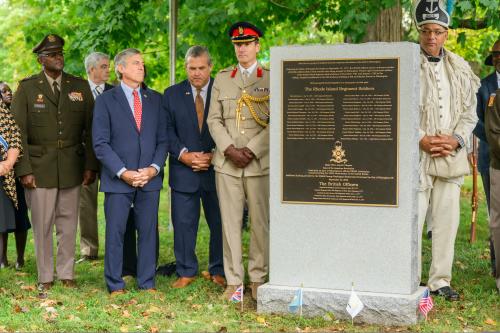 A Memorial for America's 250th Anniversary
The new monument was dedicated as Wilmington and communities throughout the country commemorate the 250th anniversary of American independence. The ceremony brought together representatives from Delaware, Rhode Island and the United Kingdom, reflecting the different stories represented at the burial site. During the dedication, the names of all 33 identified soldiers were read aloud. The ceremony also included military honors, historical reenactors, music, and graveside prayer.
After nearly two and a half centuries, the soldiers' names (and their individual stories) once again became part of Wilmington's living history.
Discover Revolutionary History in Wilmington
The memorial adds another meaningful stop for visitors exploring Greater Wilmington's connections to the American Revolution. Throughout the region, battlefields, historic homes, museums, and landmarks preserve stories from the nation's founding. But Wilmington-Brandywine Cemetery offers something different: a reminder of the individual lives behind the events found in history books.
British soldiers wounded at Brandywine. American soldiers returning from Yorktown. Black patriots who fought for a nation whose promises of freedom remained incomplete. Their stories all intersect here in Wilmington.
As America marks 250 years, the new memorial offers a place to remember those stories, reflect on the complicated history surrounding the nation's founding and ensure the people buried here are no longer anonymous. The next time you're exploring Wilmington's history, make time to discover this newly recognized chapter of the Revolutionary era, and the soldiers whose journeys ultimately brought them to the First State.

